
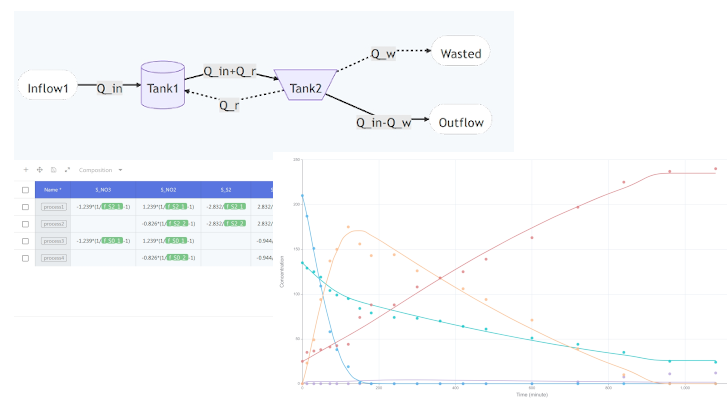
Features
- SIMPO is initiated by JiangLab (a research team in the School of Environmental Science and Engineering, Sun Yat-sen University, China). It is an intelligent computing SaaS platform specifically designed for wastewater treatment process modelling.
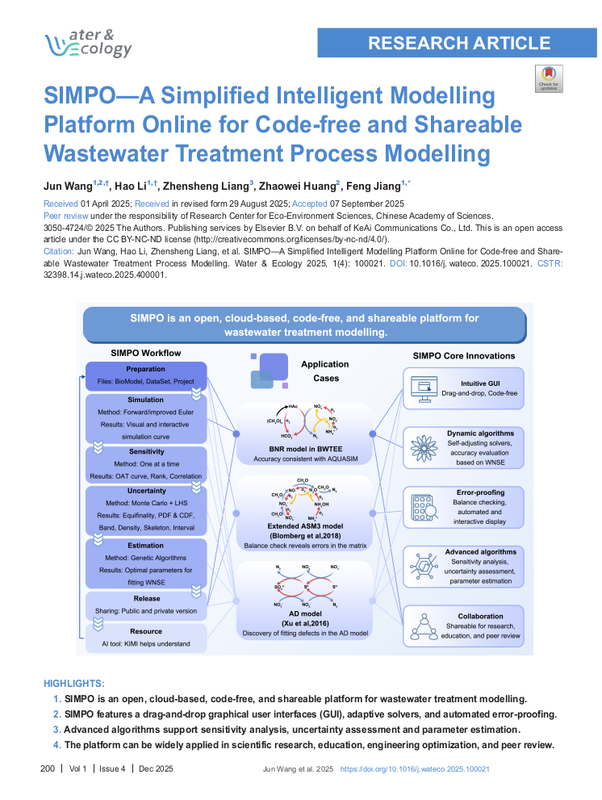
- SIMPO integrates advanced algorithms with error-proofing mechanisms, offering a user-friendly interface to lower the learning curve for model development, simulation and evaluation. Its open and collaborative features enhance accessibility and innovation, making it a transformative tool for environmental engineering research.
- SIMPO's innovations address critical limitations of traditional platforms:
- SIMPLE
- EFFICIENCY
- PREVENTION
- ADVANCED
- COLLABORATION
![[object Object]](https://i.postimg.cc/bvV8GgKj/The-Easiest-Way.gif)
Interaction and visualization of GUI provide a user-friendly modelling approach:
- Intuitive tools, such as candidate boxes and color coding, visually assist in correctly inputting variables and parameters in a complex matrix.
- The drag-and-drop GUI simplifies the design of complex wastewater treatment processes to the point of simply adding and connecting tanks on a webpage.
- The automatic drawing display helps users quickly, comprehensively, and intuitively understand the simulation and evaluation results.
![[object Object]](https://i.postimg.cc/cHN584Qz/Figure-6a.png)
Dynamic algorithm ensures the accuracy and efficiency of modelling:
- SIMPO adopts self-adjusting solvers to ensure computational efficiency without affecting accuracy, which is evaluated by weighted Nash Sutcliffe efficiency (WNSE).
- Dynamic real time step size optimization can alleviate common pitfalls such as negative concentration, which is a frequent problem in traditional tools.
![[object Object]](https://i.postimg.cc/prSfzqwd/Figure-7c.png)
Automatic error-proofing and intuitive display help to quickly identify errors:
- Balance checking can help users review the rationality of stoichiometry matrices from a theoretical perspective.
- NSE intuitively reflects the goodness-of-fit of various variables, and the automated and interactive display of results exposes the problem of certain variables being obscured by graphical scales.
![[object Object]](https://i.postimg.cc/Z5XVNK8S/Advanced.gif)
Advanced evaluation algorithms bring comprehensive and systematic understanding of models:
- Sensitivity analysis identifies sensitive parameters and their correlations, reducing the number of parameters to enhance computational efficiency.
- Uncertainty assessment evaluates the uncertainty of each parameter, determines the predicted range of model outputs, and refines parameter ranges for more accurate simulations.
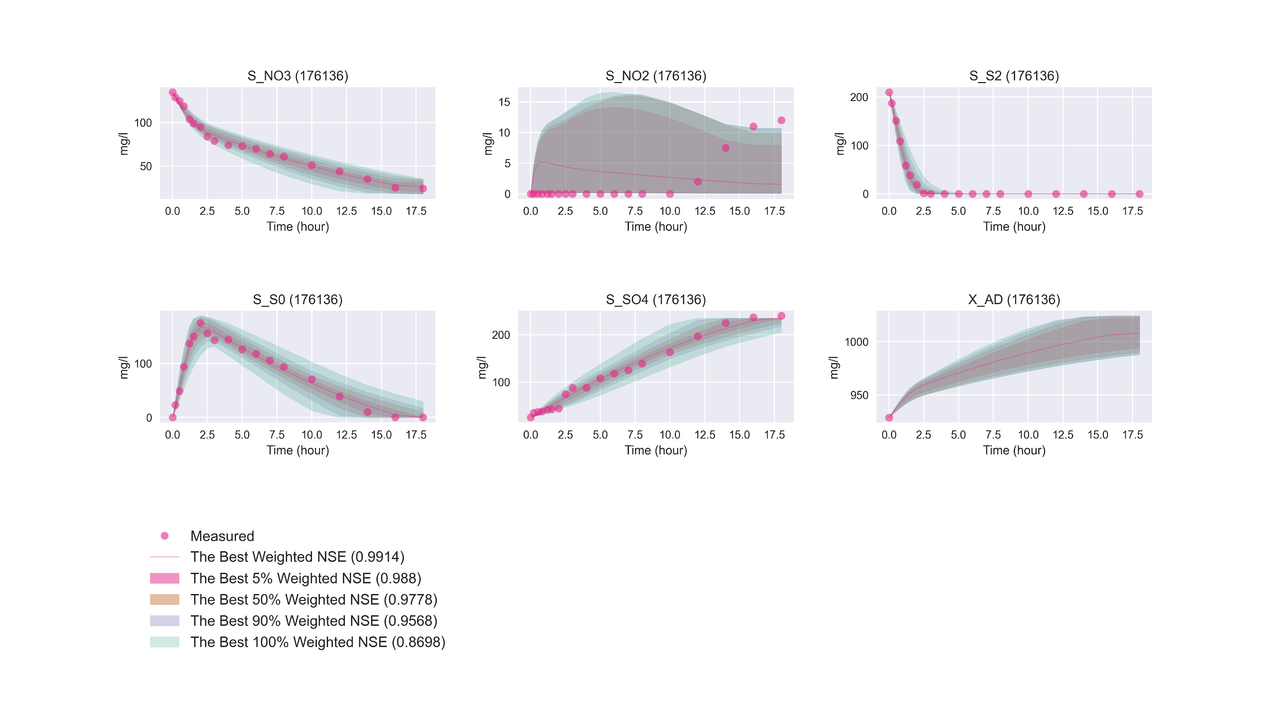
- Parameter estimation identifies the local optima of parameters that best fit the measured data, ensuring robust and reliable model calibration.
![[object Object]](https://i.postimg.cc/Gp2K6TbG/Collaboration.gif)
Collaborative science facilitates the dissemination, exchange, and development of models:
- SIMPO supports version-controlled models, data and results sharing, provides public/private repositories, and advocates a new type of peer review workflow for modelling papers, in line with the principles of open science.
Algorithms
SIMPO's core algorithms:
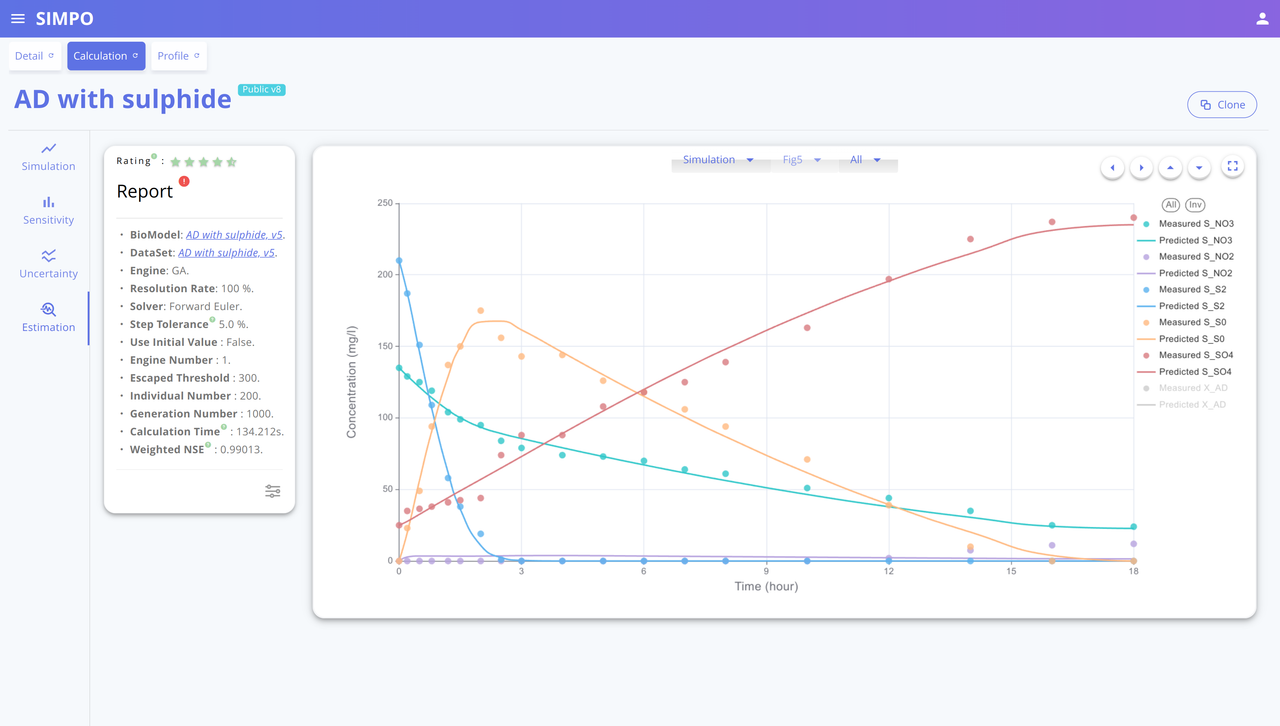
SIMPO provides accurate and efficient ODE solvers, negative value response strategy to cater to diverse modelling needs. The WNSE is employed as the goodness-of-fit criterion for model evaluation.
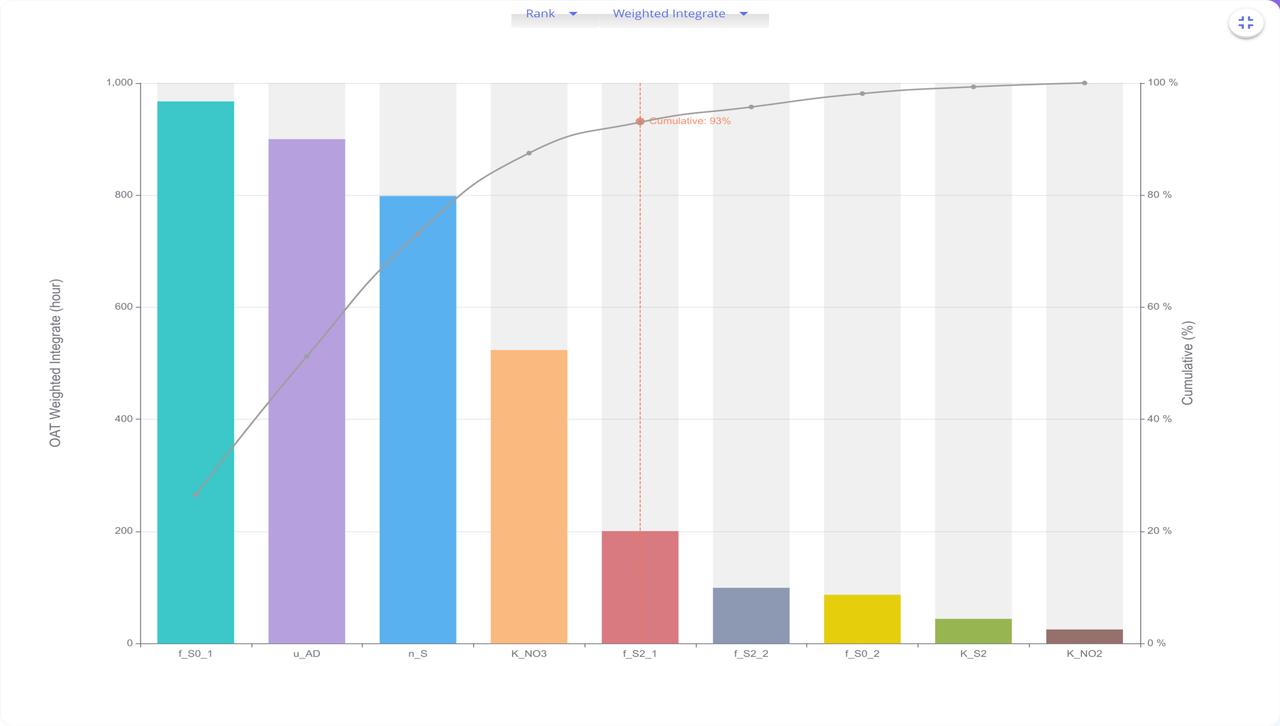
Sensitivity analysis identifies the most sensitive parameters that have the greatest impact on outcomes, and improve computational efficiency by reducing the number of parameters.
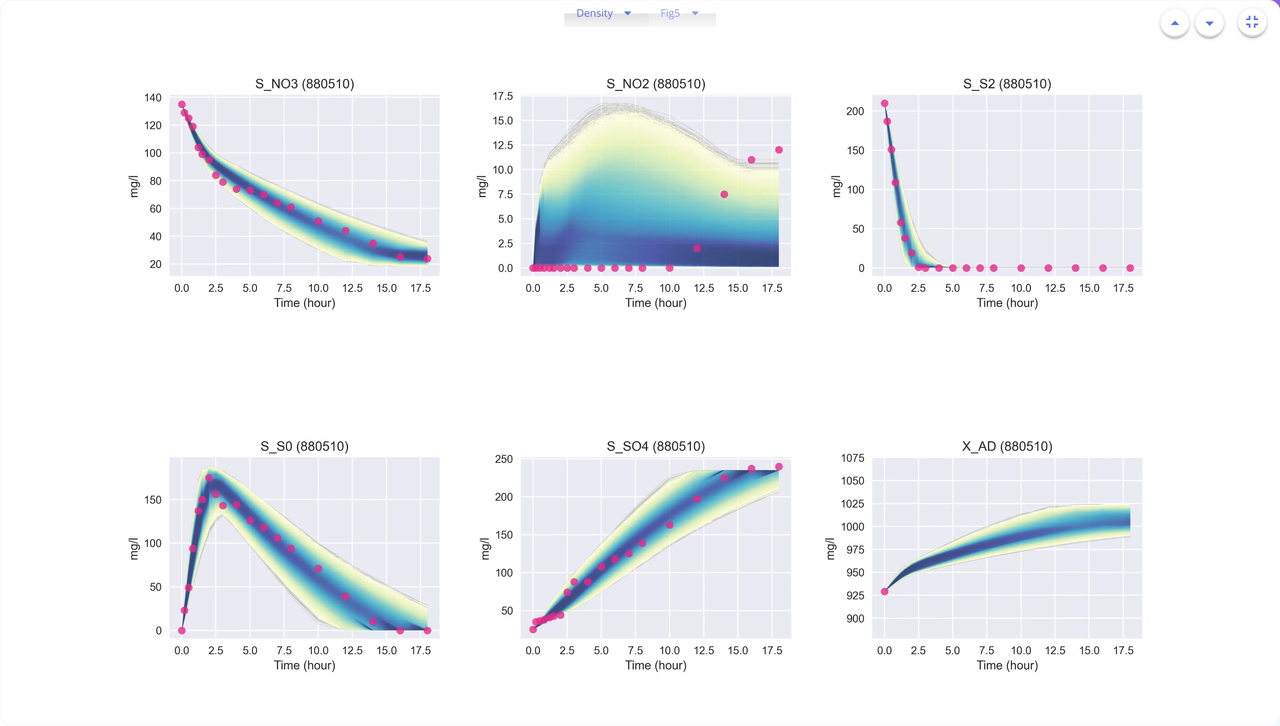
Uncertainty assessment evaluates the uncertainty, distributions and equifinality of parameters, determine the predicted range distribution of model outputs, and refine the range of parameter values.
Resourses
Let's build and use the Paper Resource together.
![[object Object]](https://i.postimg.cc/HL2FXpF6/resource.png)
Everyone is welcome
- Join us in building and enhancing Paper Resource with the help of powerful AI tools. Your contributions can significantly enhance and expand the collection, making it more valuable for the entire community.
- We appreciate your support and collaboration, fork and pull request are welcome in: simpo-home
Publications
The following papers have adopted SIMPO as their experimental tool.
Roadmap
This is the raodmap ofSIMPO. For more details please refer to: Changelog.gantt
dateFormat YYYY-MM-DD
axisFormat %Y-%m
tickInterval 6month
todayMarker on
title Developed Timeline
excludes weekends
section SIMPO
Standardized Input Template :done, a1a, 2018-01-01, 2019-10-01
Simulation Engine :done, a1b, 2018-02-01, 2020-10-01
Connected to Simpo Dash :done, a2, after a1b, 2022-10-01
Version Control :done, a12, 2022-08-01, 2023-05-01
section SIMPO Pro
Sensitivity Engine :done, b1a, 2018-01-01, 2019-01-01
Uncertainty Engine :done, b1b, after b1a, 2020-01-01
Estimation Engine :done, b1c, after b1b, 2021-01-01
Connected to Simpo Dash :done, b2, after b1c, 2022-12-01
pH Calculation :done, b3, after c4a02, 2025-11-27
AI Paper Resource :crit, b3a, after b3, 60d
SCE-UA :c4a03a, after b3a, 120d
10 Layer Settling Reactor :b4, after c4a03a, 90d
Enhanced Function Stable :milestone, mc2, after b4, 0d
Automatic Evaluation :crit, c4a04, after b4, 60d
Standardized Repositories :c5Repositories, after c4a04, 30d
Standardized Rate :crit, c5Rate, after c5Repositories, 30d
Automatic Construct BioModel :crit, c5, after c5Rate, 30d
GPU capacity :c9, after c5, 300d
AI Algorithm :crit, c6, after c9, 300d
Mechanism + Blackbox Model :milestone, mc3, after c6, 0d
PlugFlow Reactor :c4c, after c6, 60d
BioFilm Reactor :c4d, after c4c, 90d
Sewer Reactor :c4e, after c4d, 90d
Real-Time Support :c5a, after c4e, 300d
Steady State :c4StedayState, after c4e, 120d
CFD Algorithm :c7, after c4StedayState, 300d
section SIMPO Dash
Web Frontend/Backend Core Function :done, c1, 2018-10-01, 2023-01-01
Basic Function Stable :milestone, mc1, after c1, 0d
FlowChart :done, c12, after c1, 90d
Http to Https :done, c2, 2023-05-01, 2023-06-10
Estimaiton Engine :done, c3, after c2, 2023-12-31
Uncertainty Engine :done, c4, after c2, 2023-12-31
FlowChart Upgrade :done, c40, after c4, 2024-04-23
AI (Kimi) Support :done, c40kimi, after c40, 2024-06-23
BioModel Composition :done, c4aComposition, after c40kimi, 2024-12-18
Estimaiton Plotting :done, c4a01, after c4aComposition, 2025-01-30
Uncertainty Plotting :done, c4a02, after c4aComposition, 2025-01-30
3D Digital Twin :c8, after c7, 300d
Discussion Board :c10, after c7, 300d